Megan White
Megan White is an RN and PhD student in the Faculty of Health at Dalhousie University. She received her Bachelor of Science (Nursing) from Dalhousie University and her Master of Arts from Athabasca University. Her research interests include arts-based qualitative and feminist poststructuralist methodologies, eating disorders and body image among queer communities, and constructivist grounded theory investigations of women’s engagement with media. Megan is currently Manager of Health & Wellbeing at Mount Saint Vincent University in Halifax, Nova Scotia.
The Western fascination with true crime (TC) narratives and content is well-established and shows no signs of slowing. Relatively recently, consumers and academics alike have noted that the genre’s audience is predominantly made up of women, the same demographic most likely to be victimized in ways similar to those commonly depicted in TC content. A question that has received little academic attention, however, is why? Much of the intracommunity and layperson discussion regarding women’s TC consumption happens online, and Reddit has been noted in the literature as a particularly lively arena for discussion of this phenomenon. The present paper offers an exploratory grounded theory of Reddit users’ constructions of women’s disproportionate consumption of TC content. The theory suggests a discursive theme, Capacities for Empathy, as a schema for understanding the ways in which Reddit users construct the social concern of women and their relationship with true crime content. The discursive theme includes constituting elements empathizing, perceiving risk for victimization, rehearsals of survival, and interpassive justice.
Keywords: True crime, women, empathy, grounded theory, constructivism, Reddit
A woman’s fear and anger can be powerful things. That’s the virtue of true crime. No other genre gets to the core, nagging feeling that most if not all women harbor – that everything is fine, probably, but also might not be. (Moskowitz, 2020, para. 26)
The intense Western fascination with true crime (TC) is not, by any measure, a novel phenomenon. Nonfiction crime writing and “murder narratives … have a history that spans centuries” (Murley, 2008, p. 2), such as in “19th century Britain, [where] a multitude of crime newspapers and magazines were published, from the Illustrated Police News to every lurid detail regarding the Jack the Ripper murders” (Grande, 2021, para. 4). TC as we know it today – as a “multifaceted, multigenre aesthetic formulation, a poetics of murder narration” – made its appearance in 1940s America with the publication of True Detective, a magazine that reported crime in ways that were “more sensitive to context, more psychologically sophisticated” (Murley, 2008, p. 2). As the genre crept yet closer to what it is today, the so-called “golden age of serial killers” in 1970s America, “when the likes of Ted Bundy, John Wayne Gacy and Kenneth Bianchi were all active and loose on the streets” dominated both the larger media and TC genre-specific content (Grande, 2021, para. 4). During the 1980-90s, TC informed audiences about forensics, criminal profiling, and the (arguably pseudo-)sciences of blood spatter and bite mark analysis (Murley, 2008). 2014 saw the release of the bombshell podcast Serial, creating the ‘serial effect,’ (Pew Research Center, 2016) and coaxing the genre into its current formation; a way of sense-making the senseless, a “worldview, an outlook, and a perspective on contemporary American life, one that is suspicious and cynical, narrowly focused on the worst kinds of crimes, and preoccupied with safety, order and justice” (Murley, 2008, p. 2).
TC content has been and remains immensely popular, and while there has always been “an appetite for those stories of horror and savagery, … it wasn’t until the 2000s that researchers and psychologists noticed a link between women and true crime that was previously overlooked” (Grande, 2021, para. 4). It is indeed well-demonstrated in the literature that women are the bulk of TC audiences (Vicary & Fraley, 2010). The question that has received little academic attention, however, is why? I offer here a grounded theory exploration of TC consumers’ beliefs about the question. Social media platforms appear to be the main arenas for these intracommunity discussions, and Reddit provides plentiful and lively conversations on the topic, largely by women. With this study, I do not seek to define or make generalizable objectivist assertions regarding women’s engagement with TC content. Rather, I seek to understand the ways in which a particular group of people online construct the social concern of women and their relationship to TC content.
To this end, the present research aims to explore how Reddit users understand women’s enjoyment of TC content and offers an exploratory grounded theory. The theory suggests a discursive theme, Capacities for Empathy, as a schema for understanding the ways in which Reddit users construct the social concern of women and their relationship with TC content. The discursive theme includes the constituting elements empathizing, perceiving risk for victimization, rehearsals of survival, and interpassive justice.
This section, in keeping with Robert Stebbins’ (2001) views on literature reviews for exploratory and non-confirmatory research, will be shorter than is typical of non-exploratory research. Stebbins, who has written extensively about exploratory research methods in the social sciences, asserts that the purpose of a literature review in such research is to demonstrate a relative paucity of extant study addressing the question at hand. An exhaustive literature review here is therefore probably unnecessary and would risk cluttering the overall product. It is also worth mentioning that, as per conventions of grounded theory, this literature review was conducted after data collection, analysis, and theorizing were (iteratively) completed. That is, the frameworks and perspectives discussed below were not considered during the design of this study, data collection, or analysis but are rather presented here to situate this work within the current literature.
A scan of academic and grey sources addressing women’s TC fandom largely reflected the data I collected. The most referenced study on the topic – one cited in several academic sources and in nearly every grey source I could find – comes from Amanda Vicary and Chris Fraley. Their 2010 paper entitled, “Captured by True Crime: Why are Women Drawn to Tales of Rape, Murder, and Serial Killers?”, found that women were drawn to stories of TC whereas men were drawn to elsewise violent content such as war stories. The reasons for this, the authors tentatively conclude, may be based in a fear of victimization rather than in such a likelihood (Allan, 2006; Mirrlees-Black et al., 1996; Vicary & Fraley, 2010). Despite the fact that men are likelier to be both perpetrators and victims of violent crime (notwithstanding sexual assault and rape), women are nevertheless compelled toward “stories that contained fitness-relevant information,” (Tuttle, 2019; Vicary & Fraley, 2010, p. 85) which suggests that these women may be preparing for potential future victimhood. Several explanations for this heightened fear of victimization have been proposed in the literature, including biased media coverage of violent crime against women that often blames victims and employs passive language (Alat, 2006; Boling, 2022; Cuklanz & Moorti, 2006; Ditton & Duffy, 1983; Gilchrist, 2010; Gordon, 2021; Kahlor & Eastin, 2011; Meyers, 1997, 2004; Moore, 2011; Northcutt Bohmert et al., 2019; Vicary & Fraley, 2010), as well as the statistical reality that women are most often the victims of sexually-motivated crimes (Gordon, 2021; Rigor et al., 1978; Vicary & Fraley, 2010). Further to this point, Laura Browder (2006) reports that women may consume TC literature as a method of coping with “patriarchal violence they have encountered in the past, and fear in the present” (p. 928). Katie Tuttle (2019) extrapolates this position yet further, arguing that when women hear, for example, the hosts of immensely popular TC podcast My Favorite Murder discuss their own instances of near-victimization or near-miss situations, it may open up a kind of parasocial psychic space in which the listener feels validated and thus permitted to work through her own experiences of such vulnerability or victimhood. Kelli Boling (2022) puts this sentiment otherwise, writing that women who consume TC podcasts are:
… using the media in unprecedented ways, challenging the patriarchal nature of media’s historical coverage of domestic violence, and shedding light on weaknesses in the criminal justice system. By immersing themselves in a world where their lived experiences are normalized, these women can process their own trauma and collaborate with podcasters to educate others. (p. 1)
Several sources consulted for this literature review assumed that women have a heightened capacity for empathy and positioned that empathy as reason for their disproportionate consumption of TC content. A 2021 YouTube video from The Take entitled “Why Women Love True Crime” posits that women can picture themselves in the proverbial shoes of victimized women featured in TC and are therefore compelled by TC content that re-centres victims instead of male perpetrators. “Some experts argue that women’s interest in true crime may be connected to females’ generally higher level of empathy,” writes Eden Gordon, who goes on to quote forensic psychiatrist Howard Forman, “That [heightened empathy] may lead to true crime being more interesting to women than men, simply because if you empathize more with the victim, it may be more relevant to you and more gripping” (para. 16).
The final major relevant element from the literature review is what I have labeled in this paper ‘interpassive justice,’ a thorough discussion of which occurs forthwith. TC content, argues Megha Sharma (2020) for Vogue India, “promotes a sense of justice” (para. 4). Gordon (2021, para. 4) echoes this sentiment, positing that, “strangely enough, learning about serial killers who had brutally murdered women actually felt cathartic, almost comforting.” YouTube creator Alice Cappelle (2022) even uses the word ‘revenge’ while addressing this topic. All of this suggests that women may experience a displaced feeling of justice served on behalf of themselves or a victimized woman who is no longer alive to experience it for herself. This may also allow a victimized woman who died without justice to be known in a fuller (albeit displaced) posthumous humanity through TC watchers’ consumption of the content and through their capacity for empathy.
This review of the literature is necessarily somewhat cursory. That said, what I found reflected the bulk of the data I collected as well as the analysis I (co-)constructed. Although the present research does not aim toward generalisability or repeatability, the reviewed literature nevertheless serves to buttress the analysis presented below.
This study was conducted using a constructivist approach to grounded theory. There is no single or universally agreed-upon definition of grounded theory (GT). Rather, there are angles of approach, each of which is championed by different scholars. That said, GT is, at its core, a systematic method of inquiry leading to the development of theory based solely or largely on the data collected for that particular study (Charmaz, 2014). GT “begins with inductive data, relies on comparative analysis, involves simultaneous data collection and analysis, and includes strategies for refining analytic categories” (Charmaz, 2017, p. 299). Put simply by Barney Glaser, one of the methodology’s founders, “GT is simply the discovery of emerging patterns in data” (as cited in Walsh et al., 2014, p. 593).
There are a handful of well-developed approaches to GT and, although discussion of each is beyond the scope of this paper, I will touch briefly on the one employed in the present study: constructivist GT (CGT). A later revision of GT developed by Kathy Charmaz, CGT builds upon the basic premises offered by its founders while differing in a few significant ways. Firstly, CGT carries an ontological assumption that “social reality is constructed” (Coşkun, 2020, p. 4). Secondly, it carries a relativist epistemological assumption that “social reality can be grasped through interactions with data and participants” (p. 4) and takes a reflexive orientation toward researchers’ lived experience, knowledge, and positionalities. Finally, CGT contextualises resultant theory, situating the “research in the historical, social, and situational conditions of its production” (Charmaz, 2017, p. 299).
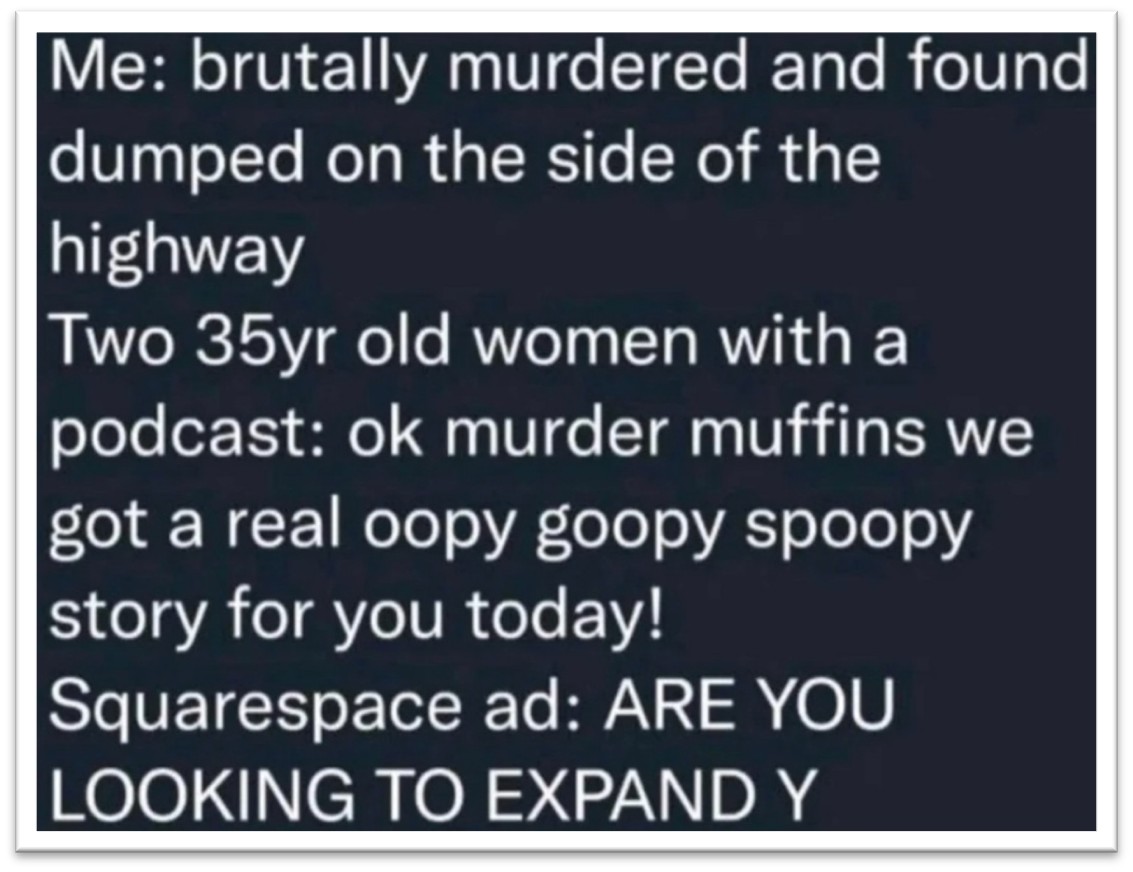
Reddit is an “aggregating, rating, and discussion site” (Boling & Hull, 2018, p. 97) sometimes colloquially known as ‘the front page of the Internet.’ Reddit is a highly trafficked social media platform with an estimated 52 million active users (Proferes et al., 2021). Content is user-generated and posted to topic-specific discussion boards known as ‘subreddits’ (Marotti, 2018; Proferes et al., 2021). Users may then comment on this content and those comments are aggregated into ‘threads.’ Comments can be ‘upvoted’ or ‘downvoted’ typically indicating dis/agreement with the sentiment contained therein. I chose Reddit as the data source for this study largely because TC audiences are well represented on the site despite the fact that TC audiences generally skew female (Vicary & Fraley, 2010) and Reddit users skew male at 67% (Barthel et al., 2016; Boling & Hull, 2018). The platform has a robust history of socio-cultural impact, and it is important for the present discussion to note that Reddit, much like any other social media platform, has cultural norms and expectations, meaning that deciphering or making sense of collected data can pose some challenges. For example, one of Reddit’s norms is that most content (aside from the occasional celebrity appearance) is posted anonymously and identifying oneself is often frowned-upon because “site-wide norms discourage participation with one’s real name as a privacy-protecting measure” (Proferes et al., 2021, p. 2). All of this leads to the expectation that, if one is going to post personal information or anecdotes, they should use a ‘throwaway’ account intended for use in sharing a particular post and then to be discarded. Moreover, internet meme culture is a many-headed hydra, and while some of the references made sense to the present researcher, there were some references that were admittedly beyond the scope of my understanding. Moreover, many subreddits have their own ultra-specific inside jokes and references that quickly fold back onto themselves creating highly self-referential or ‘meta’-references that necessitate contextual knowledge of the subreddit’s history and of internet meme culture in general to grasp (for example, see Figure 1, the image macro which served as discussion prompt for thread 12).
With all of this in mind, it is worth noting that the current research does not purport wholistic knowledge of or familiarity with all subreddits from which the data were mined. That said, every effort was made to view the data within the context of the TC community, about which this author has considerable sensitized knowledge. The Reddit threads from which the data was pulled are found in Table 1.
Table 1
Data Source Reddit Threads
| Thread | Subreddit | Discussion Prompt |
|---|---|---|
| 1 | r/TooAfraidToAsk | “Why do women like true crime so much?” |
| 2 | r/TrueCrime | “Why do you think women are more interested in true crime?” |
| 3 | r/UnsolvedMysteries | “Here’s a mystery. Why do women like true crime more than men?” |
| 4 | r/RedScarePod | “Why do women like true crime more than men?” |
| 5 | Excluded | N/A |
| 6 | r/NoStupidQuestions | “Why are women obsessed with true crime shows/serial killers?” |
| 7 | r/TooAfraidToAsk | “Why do so many women love true crime?” |
| 8 | r/TwoXChromosomes | “Why do mostly women watch true crime shows/true crime?” |
| 9 | r/NoStupidQuestions | “Why do women like true crime documentaries so much?” |
| 10 | r/AskWomenNoCensor | “How come so many women love watching true crime and researching serial assailants?” |
| 11 | r/TrollXFunny | “Why are Millennial women so interested in true crime?” |
| 12 | r/NonPoliticalTwitter | Image macro (see Figure 1). |
Figure 1
Image Macro Discussion Prompt for Data Source Reddit Thread 12
This study is based on data collected from 11 Reddit threads. I executed a site-specific search on Google using the following terms: “site:reddit.com women true crime.” Results were mined by hand and the first relevant 12 selected. The data from those threads was copied verbatim into Microsoft Word (Version 2302) and uploaded to web-based qualitative coding software Taguette (Rampin et al., 2021). Thread number five was excluded from the study because, upon close reading, it consisted largely of users arguing about topics unrelated to either the thread’s title or the question posed in the initial discussion post.
There are some elements worth considering when using extant documents as data. Glaser and Strauss (1967) wrote that documents could “hardly be used as a chief source of data,” (p. 168) however several scholars of note such as Charmaz (2014) and Mills (2014) have contested this assertion (Ralph et al., 2014). Prior (2008) writes that, “documents do much more than serve as informants and can, more properly, be considered as actors in their own right” (p. 822). Moreover, “grounded theories of documents can address form as well as content, audiences as well as authors, and production of the text as well as presentation of it” (Charmaz, 2014, p. 45). To this end, I employed a ‘contextual positioning’ method outlined by Ralph et al. (2014) which involves a process of “targeted questioning for the purpose of positioning data for analysis but is not intended as an analytical tool per se” (p. 4). The questions, which can found in Table 2, are meant to position data for the study at hand and to partially compensate for “decreased sensory involvement and symbolic interactions” (p. 4) that can be a limitation of working with unelicited documents. Consistent with the constructivist approach which focuses on “how participants construct meaning in relation to the area of inquiry” and recognizes that constructivists “co-construct experience and meanings with participants,” (Chun Tie et al., 2019, p. 2) I have here treated the data as socially constructed.
Data collection, coding, and analysis were completed iteratively, using the constant comparison method, and memos were also generated throughout. Initial and focused coding efforts were undertaken using a GT approach to discourse analysis which entails coding data into related groups or formations which may subsequently lead to analytic categories. Those concepts were grouped into a major discursive theme discussed shortly.
Table 2
Contextual Positioning Questions from Ralph et al., 2014
| Purpose | Questions | |
|---|---|---|
| Who | To identify |
|
| What | To define |
|
| When | To chronicle |
|
| Where | To locate |
|
| Why | To rationalize |
|
| How | To explain |
|
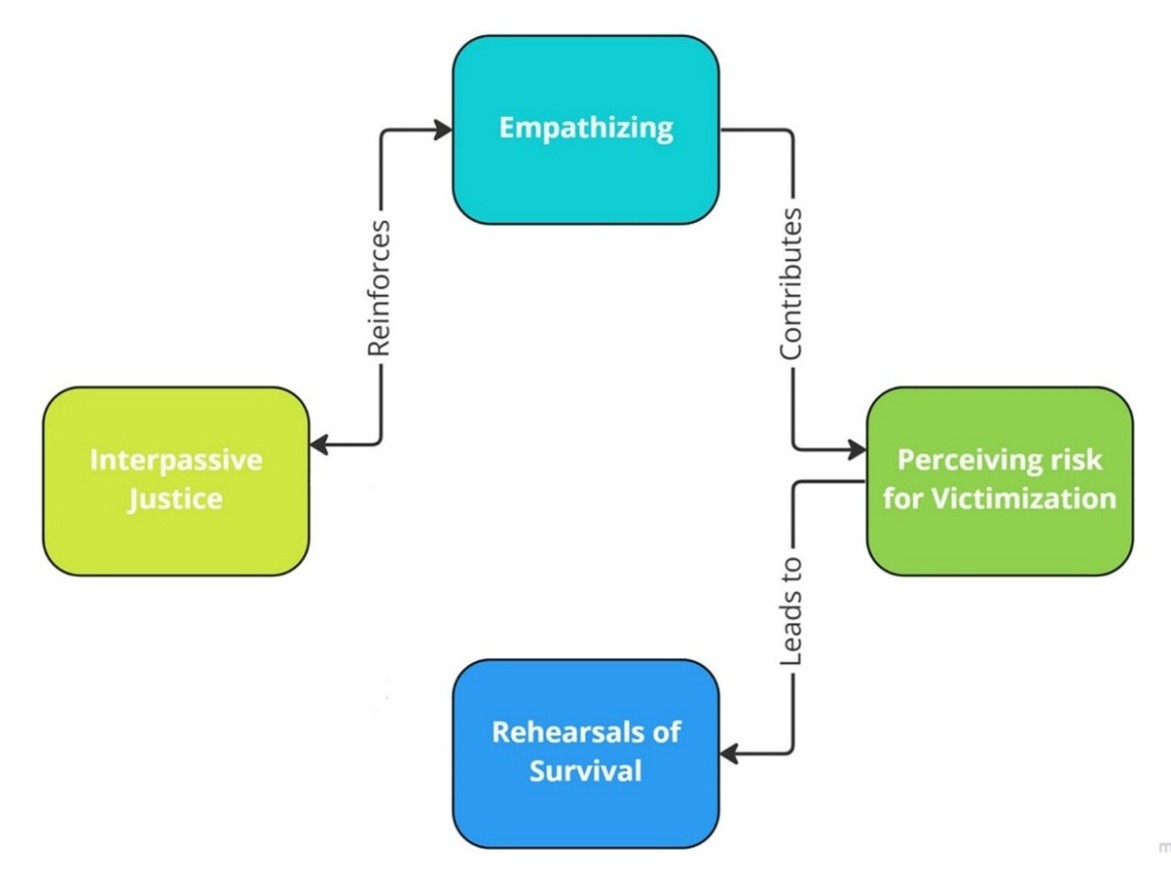
Discourse analysis of collected data resulted in a core category (or discursive theme), which functions as a constructed system of beliefs made up of uni- or bi-directional feedback relationships that form its scaffolding. Per Glaser, “systems are complex ways properties of categories relate to each other and vary one category in relation to other categories” (2002, p. 30). The system is constructed of the concepts treated in detail below and is depicted in Figure 2. The notion of empathy functioned in dual capacities, serving both a theme and as a constituting concept.
Figure 2
Discursive concepts and relationships that form the core theme, ‘Capacities for Empathy.’
The code ‘empathizing’ occurred 23 times in the data. Empathy was fundamental to Reddit users’ (henceforth referred to as ‘posters’) understanding of women’s enjoyment of TC. Posters positioned what they saw as women’s heightened ability to imagine themselves in the place of depicted victims as a lynchpin element of their capacity for empathy. This is demonstrated in the following comment taken from the data. 1
1Comments from Reddit users pulled from collected data appear throughout the text to demonstrate theoretical concepts.
It's notable on this front that a lot of true crime focuses on serial killers, and a lot of serial killers have targeted women specifically, and many women might see themselves in true crime stories and get invested in a way some men don’t. To that point, there’s also the possibility that, because women are on average more empathic than men by adulthood, they are more likely to empathize with the victims (or killers), and in turn get more invested in the stories.
Reddit poster 1
Posters’ descriptions were consistent with some of the dimensions of empathy as defined by nurse researcher Beatrice Kalisch in her important (1973) paper “What is Empathy?” but were somewhat inconsistent with others. Kalisch defines empathy as a process of “borrowing the feelings of another in order to really understand them, but never losing your own identity” (p. 1548).
I mean, I think a large part of the thrill of true crime stories comes from being able to project onto the victim and imagine being in their position yourself.
Reddit poster 2
In the comment above, poster 2 describes their belief that the ability to project oneself into the situation of a depicted victim is an important element in women’s enjoyment of TC. Their comment indicates that they are themself able to engage in that same cognitive process, which is consistent with Kalisch’s definition of empathizing.
I think it’s easier for women to imagine being the victim of a crime than it is for men, which makes it a little more visceral to hear about it.
Reddit poster 3
In the comment above by poster 3, however, they use the word ‘visceral’ which could indicate that their understanding veers away from Kalisch’s conception of empathy and instead toward her conception of sympathy. For Kalisch, sympathy is similar to empathy in that it involves a feelings-borrowing cognitive process but is different because, when experiencing sympathy, one “takes on” the other’s “feelings and circumstances as if he were in his place” (p. 1548, italics in original). This poster’s use of the word ‘visceral’ implies a physical dimension of the emotion, which may put their sentiment closer to sympathy than to empathy.
There were a few posters who expressly disagreed with the above ideas about empathy, as demonstrated in the comment below. That said, this was one of only three comments I could find in which the poster disagreed with the assertion that women are, by and large, highly empathic TC consumers.
I don’t think that by default all women are empathetically thinking “I could have been this victim,” though.
Reddit poster 4
It appears posters’ overall understanding of empathy as it relates to women’s enjoyment of TC is tightly tied to a capability to adopt, to some degree or another, the emotions and experiences of a depicted victim in TC narratives.
The second constituting element I have labelled ‘perceiving risk for victimization.’ This code occurred in the data 64 times, making it the most commonly occurring overall. It also co-occurred with ‘empathizing’ 12 times. In response to the query “why do women like TC more than men?” the poster of the comment below describes their belief that women’s perspectives on TC are likely affected by their heightened awareness of the potential for their own victimization.
Women are accustomed to being (in general) more aware of their own vulnerability to crime, and their perspective is likely to be different as a result.
Reddit poster 5
I theorize a uni-directional relationship between the concepts ‘empathizing’ and ‘perceiving risk for victimization’ in which empathy makes possible a heightened perception of risk for victimization. Posters consistently positioned women’s capacity for empathy as a factor which contributes to their ability to recognize and/or assess the likelihood of their own victimization. This is demonstrated by poster 6 below, who describes feeling empathy and connects that experience to an awareness of her own risk for victimization.
Everytime a women [sic] is getting hurt in one of these shows/podcasts I imagine it’s me. It feels like there is no reason why it isn’t me or I could be next.
Reddit poster 6
The third constituent concept included in the discursive theme ‘Capacities for Empathy’ is ‘rehearsals of survival.’ Posters felt that when women consume TC content and perceive their own risk for victimization, it leads them to engage in cognitive rehearsals of survival. The code ‘rehearsals of survival’ occurred in the data 59 times and co-occurred with ‘perceiving risk for victimization’ 38 times, indicating that the two concepts dovetail tightly in posters’ assessments of women’s TC consumption.
This 100% it’s always “what would I do differently?” [sic] When watching what happens to all those women.
Reddit poster 7
There’s a show called “I survived” [sic]. There’s a lot of people surviving attacks, kidnapping and assault. I legit [sic] watch it for tips just in case.
Reddit poster 8, in response to poster 7, above
The above exchange demonstrates some ways in which women consumers learn from TC content and incorporate that learning into cognitive rehearsals of survival; in essence, they are preparing for potential victimization by internally practicing survival strategies. Cognitive rehearsal is a well-defined psychotherapeutic concept that “involves mentally rehearsing responses to scenarios” (Kousha et al., 2022, p. 5) or “situations that tend to produce anxiety or self-defeating behavior and then […] mentally rehearsing more appropriate behavior” (VandenBos, 2015). Posters did not explicitly indicate that they employ such rehearsal tactics toward therapeutic ends, but rather that they use them to prepare for survival should they be victimized in ways similar to those depicted in TC narratives.
And gives it [sic] you time to think of how you would react if it was you/prepare for when it does happen.
Reddit poster 6
The final concept in the discursive theme is one which I call ‘interpassive justice.’ The term interpassive was described in the mid-1990s – with considerable intellectual debt to Jacques Lacan – by Austrian thinker Robert Pfaller and Slovenian philosopher Slavoj Žižek. The term refers to works of art which are able to “enjoy themselves,” as it were, or, perhaps more accurately, enjoy “on our behalf” (Oenen, 2008, p. 1). That is, an interpassive experience is a sort of once-removed expression of itself on the consumer’s behalf via a work of art such as a film, television show, or podcast. I theorize that women TC consumers, insofar as they empathize with depicted victims, can experience – interpassively – a frustrated sense of ‘justice served’ on behalf of those victims as well as for themselves. Sharma quoting psychotherapist Rhea Gandhi:
The code ‘interpassive justice’ occurs in the data 26 times and co-occurs with ‘empathizing’ 12 times. I theorize that ‘interpassive justice’ exists within the discursive theme ‘Capacities for Empathy’ in a bi-directional reinforcing relationship with ‘empathy’ qua concept. I theorize empathy as a necessary precondition for interpassive justice. That is, in order for the viewer to experience interpassive justice, they must be capable of ‘borrowing the feelings’ of a victim through an ability to cognitively project themselves onto the situation of a depicted victim.‘In reality, women are often the victims or survivors of crime, rather than perpetrators. Perhaps we are drawn to this genre in search of a sense of justice,’ she postulates. ‘As women living in a deeply patriarchal society, feeling unsafe and frightened is almost a constant state of mind, and perhaps, our deep desire to feel safe and protected by legal systems is sublimated when we watch stories where justice prevails. That sense of justice we feel at the end of a true crime film or series reflects our desire to be a part of social and legal systems that work tirelessly toward women’s safety and protection.’ (2020)
In the comment below, the poster describes a vicarious experience of ‘justice’ that a victim of sexual assault might seek. She expresses a belief that women TC consumers may seek out narratives in which perpetrators of such crimes are prosecuted in order to ‘experience’ justice. In this way, the depiction of an assailant’s prosecution can be construed as an interpassive experience of justice – one rooted in empathetic capacity.
Imagine getting sexually assaulted a few times a year. And not getting any justice whatsoever, over several years. Some might seek justice vicariously.
Reddit poster 9
However, what poster 9 describes also sounds a lot like catharsis. I want to be clear that my use of ‘interpassive’ here is adjacent to and somewhat overlapping with catharsis but is not quite identical. It is not the same because I theorize that posters are describing a dual experience of ‘justice served’; on one level, the TC content may function as a conduit through which viewers can experience vindication on their own behalf, as demonstrated in poster 9’s comment. On a second level, users also describe a once-removed sensation of ‘justice served’ on behalf of a murdered woman who is no longer present to see her assailant brought to justice.
There’s a recapturing of humanity that happens. They’re [depicted victims] not just a body on the side of the road, they were a person in their own right, with hobbies, goals and an impact on others.
Reddit poster 10
‘Interpassive justice,’ then, occurs as a once-removed experience of justice on behalf of both the true crime consumer (who may be with her own traumatic victimized history but without justice) and, by extension, also on behalf of the murdered victim who is no longer living and able to feel that same justice served. If we accept this premise, this kind of interpassive experience is a modified version of the original Pfallerian or Žižekian but is also overlapping with catharsis; it is a once-removed or, perhaps more accurately, sublimated urge for justice experienced interpassively.
I have an inclination to say here that sublimation may not be the right term because the desire for justice is not typically considered ‘socially unacceptable.’ In fact, carceral systems in North America are so robust that about 20% of global prisoners are incarcerated in the United States alone (Wagner & Bertram, 2020). That said, if we consider the types of offences for which a TC consumer would most likely experience a desire for justice, we can see they are the kinds of offences for which women are often denied justice and for which, in practice at least, seeking justice is often deemed socially unacceptable. Plainly put, domestic violence, sexual assault, and rape are crimes for which women are at best disincentivized and at worst coerced to not pursue justice. Prochuk (2018) found that nearly 90% of sexual assault victims in Canada are women, about 5% of those assaults are reported and, of that 5%, about 11% result in convictions.
Prochuk found that “most participants in our project ultimately determined that the risks and costs of reporting outweighed the possible advantages for them,” largely because “there is a culturally entrenched skepticism about sexual assault that does not seem to apply to other crimes. Therefore, survivors may fear that they will be met with unsupportive responses if they disclose their experience to others” (pp. 4-5). When viewed in this context, women’s – perhaps especially those who have been victimized themselves – desire to experience justice may be sublimated onto TC content in which that justice is served. That serving of justice is then experienced interpassively via the TC content, resulting in a displaced experience of justice which is informed by their capacity for empathy. Some posters even stated that, for this reason, they do not enjoy consuming TC in which the cases are unsolved, perhaps because such narratives deny the viewer the sensation of seeing ‘justice served.’
The worst are the cold cases, it’s almost unbearable knowing that people who can do such terrible things are still out there.
Reddit poster 11
The present GT research is my attempt to investigate the ways in which Reddit users construct their beliefs about women’s disproportionate TC content consumption. Data were mined from Reddit threads on the topic, with collection, coding, and analysis being completed iteratively using the constant comparative method. Analysis resulted in a core category or discursive theme labelled Capacities for Empathy. The constituting concepts of the theme function in a series of relationships which serve as its scaffolding. The concept empathizing contributes to and provides the necessary precondition for the emergence of the second concept, perceiving risk for victimization, and reinforces the concept of interpassive justice. The concept perceiving risk for victimization also led to the concept rehearsals of survival. In short, Reddit users believe that women are, on average, more empathetic and that this capacity for empathy informs their disproportionate enjoyment of TC. They felt that empathy serves to heighten women’s perception of their own risk for victimization, leading to cognitive rehearsals of survival. They also felt that women’s empathy informed and reinforced their experiences of interpassive justice.
Alat, Z. (2006). News Coverage of Violence Against Women. Feminist Media Studies, 6(3), 295–314. https://doi.org/10.1080/14680770600802041
Allan, J. (2006). Worry About Crime in England and Wales: Findings From the 2003/04 and 2004/05 British Crime Survey. Office of Justice Programs. https://www.ojp.gov/ncjrs/virtual-library/abstracts/worry-about-crime-england-and-wales-findings-200304-and-200405
Barthel, M., Stocking, G., Holcomb, J., & Mitchell, A. (2016). Reddit news users more likely to be male, young and digital in their news preferences. Pew Research Center’s Journalism Project. https://www.pewresearch.org/journalism/2016/02/25/reddit-news-users-more-likely-to-be-male-young-and-digital-in-their-news-preferences/
Boling, K. S. (2022). “It’s that ‘There but for the Grace of God Go I’ Piece of It”: Domestic Violence Survivors in True Crime Podcast Audiences. Mass Communication and Society, 0(0), 1–23. https://doi.org/10.1080/15205436.2022.2061359
Boling, K. S., & Hull, K. (2018). Undisclosed Information—Serial Is My Favorite Murder: Examining Motivations in the True Crime Podcast Audience. Journal of Radio & Audio Media, 25(1), 92–108. https://doi.org/10.1080/19376529.2017.1370714
Browder, L. (2006). Dystopian Romance: True Crime and the Female Reader. The Journal of Popular Culture, 39(6). https://doi.org/10.1111/j.1540-5931.2006.00328.x
Cappelle, Alice (Director). (2022, May 31). why women love TRUE CRIME? ⚠️. https://www.youtube.com/watch?v=GRMjUe2qGRU
Charmaz, K. (2014). Constructing grounded theory. Sage Publications.
Charmaz, K. (2017). Constructivist grounded theory. The Journal of Positive Psychology, 12(3), 299–300. https://doi.org/10.1080/17439760.2016.1262612
Chun Tie, Y., Birks, M., & Francis, K. (2019). Grounded theory research: A design framework for novice researchers. SAGE Open Medicine, 7. https://doi.org/10.1177/2050312118822927
Coşkun, K. (2020). A New Explanation for the Conflict Between Constructivist and Objectivist Grounded Theory. International Journal of Qualitative Methods, 19. https://doi.org/10.1177/1609406920938280
Cuklanz, L. M., & Moorti, S. (2006). Television’s “New” Feminism: Prime-Time Representations of Women and Victimization. Critical Studies in Media Communication, 23(4), 302–321. https://doi.org/10.1080/07393180600933121
Ditton, J., & Duffy, J. (1983). Bias in the Newspaper Reporting of Crime News. The British Journal of Criminology, 23(2), 159–165. https://doi.org/10.1093/oxfordjournals.bjc.a047355
Gilchrist, K. (2010). “Newsworthy” Victims? Feminist Media Studies, 10(4), 373–390. https://doi.org/10.1080/14680777.2010.514110
Glaser, B. G. (2002). Conceptualization: On Theory and Theorizing Using Grounded Theory. International Journal of Qualitative Methods, 1(2), 23–38. https://doi.org/10.1177/160940690200100203
Glaser, B. G., & Strauss, A. L. (1967). The discovery of grounded theory: Strategies for qualitative research (paperback print). Aldine Transaction.
Gordon, E. (2021). Research Reveals Why Women Love True Crime. MagellanTV. https://www.magellantv.com/articles/research-reveals-why-women-love-true-crime
Grande, L. (2021). Here’s Why Women are Obsessed With True Crime, According to an Expert. Slice. https://www.slice.ca/why-women-are-obsessed-with-true-crime-according-to-an-expert/
Kahlor, L., & Eastin, M. S. (2011). Television’s Role in the Culture of Violence Toward Women: A Study of Television Viewing and the Cultivation of Rape Myth Acceptance in the United States. Journal of Broadcasting & Electronic Media, 55(2), 215–231. https://doi.org/10.1080/08838151.2011.566085
Kalisch, B. J. (1973). What Is Empathy? The American Journal of Nursing, 73(9), 1548–1552. https://doi.org/10.2307/3422614
Kousha, S., Shahrami, A., Forouzanfar, M. M., Sanaie, N., Atashzadeh-Shoorideh, F., & Skerrett, V. (2022). Effectiveness of educational intervention and cognitive rehearsal on perceived incivility among emergency nurses: A randomized controlled trial. BMC Nursing, 21(1), 153. https://doi.org/10.1186/s12912-022-00930-1
Marotti, A. (2018). Reddit to open Chicago office as part of advertising push. Chicago Tribune. https://www.chicagotribune.com/business/ct-biz-reddit-chicago-office-20180418-story.html
Meyers, M. (1997). News Coverage of Violence against Women: Engendering Blame. SAGE Publications, Inc. https://doi.org/10.4135/9781452243832
Meyers, M. (2004). African American women and violence: Gender, race, and class in the news. Critical Studies in Media Communication, 21(2), 95–118. https://doi.org/10.1080/07393180410001688029
Mills, J. (2014). Qualitative Methodology: A Practical Guide. SAGE Publications, Inc. https://doi.org/10.4135/9781473920163
Mirrlees-Black, C., Mayhew, P., & Percy, A. (1996). British Crime Survey 1996, England and Wales. Office of Justice Programs. https://www.ojp.gov/ncjrs/virtual-library/abstracts/british-crime-survey-1996-england-and-wales
Moore, S. E. H. (2011). Tracing the Life of a Crime Category. Feminist Media Studies, 11(4), 451–465. https://doi.org/10.1080/14680777.2011.555966
Moskowitz, P. E. (2020). True Crime Is Cathartic for Women. It’s Also Cop Propaganda. Stay sexy, don’t get murdered, and reinforce the carceral state. Mother Jones, May/June. https://www.motherjones.com/media/2020/06/true-crime-podcasts-white-women/
Murley, J. (2008). The Rise of True Crime: 20th-Century Murder and American Popular Culture. ABC-CLIO.
Northcutt Bohmert, M., Allison, K., & Ducate, C. (2019). “A rape was reported”: Construction of crime in a university newspaper. Feminist Media Studies, 19(6), 873–889. https://doi.org/10.1080/14680777.2018.1509104
Oenen, G. (2008). Interpassivity revisited: A critical and historical reappraisal of interpassive phenomena. International Journal of Žižek Studies. https://www.semanticscholar.org/paper/Interpassivity-revisited%3A-a-critical-and-historical-Oenen/793dcb29e139ef21512ce62d7ab0f416e174e947
Pew Research Center. (2016). State of the News Media 2016. Pew Research Center. https://assets.pewresearch.org/wp-content/uploads/sites/13/2016/06/30143308/state-of-the-news-media-report-2016-final.pdf
Prior, L. (2008). Repositioning Documents in Social Research. Sociology, 42(5), 821–836. https://doi.org/10.1177/0038038508094564
Prochuk, A. (2018). We Are Here: Women’s Experiences of the Barriers to Reporting Sexual Assault (pp. 1–66). West Coast LEAF. https://www.google.com/url?sa=t&rct=j&q=&esrc=s&source=web&cd=&ved=2ahUKEwjS0-rOwZqHAxV5lYkEHeyxATkQFnoECB4QAQ&url=https%3A%2F%2Fwestcoastleaf.org%2Fwork%2Fwe-are-here-womens-experiences-of-the-barriers-to-reporting-sexual-assault%2F&usg=AOvVaw3QN5KAXVBczSucUXJtVKhy&opi=89978449
Proferes, N., Jones, N., Gilbert, S., Fiesler, C., & Zimmer, M. (2021). Studying Reddit: A Systematic Overview of Disciplines, Approaches, Methods, and Ethics. Social Media + Society, 7(2), 20563051211019004 https://doi.org/10.1177/20563051211019004
Ralph, N., Birks, M., & Chapman, Y. (2014). Contextual Positioning: Using Documents as Extant Data in Grounded Theory Research. SAGE Open, 4(3). https://doi.org/10.1177/2158244014552425
Rampin et al. (2021). Taguette: Open-source qualitative data analysis. Journal of Open Source Software, 6(68). https://doi.org/10.21105/joss.03522
Rigor, S., Gordon, M., & Lebailly, R. (1978). Women’s fear of crime—From blaming to restricting the victim. Victimology, 3, 274–284. https://www.google.com/url?sa=t&rct=j&q=&esrc=s&source=web&cd=&ved=2ahUKEwi28bj2wZqHAxWug4kEHWsEBbUQFnoECBEQAQ&url=https%3A%2F%2Fwww.ojp.gov%2Fncjrs%2Fvirtual-library%2Fabstracts%2Fwomens-fear-crime-blaming-restricting-victim&usg=AOvVaw3Xqm4Sd8MUF51EVdYXnIht&opi=89978449
Sharma, M. (2020). This might be the reason why women are obsessed with true crime stories. Vogue India. https://www.vogue.in/culture-and-living/content/why-are-women-obsessed-with-true-crime-stories
Stebbins, R. A. (2001). Exploratory research in the social sciences. Sage Publications.
The Take (Director). (2021, October 7). Why Women Love True Crime. https://www.youtube.com/watch?v=N05Q8yzJhb0
Tuttle, K. (2019, July 16). Why Do Women Love True Crime? The New York Times. https://www.nytimes.com/2019/07/16/books/review/kate-tuttle-true-crime-women.html
VandenBos, G. R. (2015). APA Dictionary of psychology (Second edition). American psychological association. https://doi.org/10.1037/14646-000
Vicary, A. M., & Fraley, R. C. (2010). Captured by True Crime: Why Are Women Drawn to Tales of Rape, Murder, and Serial Killers? Social Psychological and Personality Science, 1(1), 81–86. https://doi.org/10.1177/1948550609355486
Wagner, P., & Bertram, W. (2020). “What percent of the U.S. is incarcerated?” (And other ways to measure mass incarceration). The Prison Policy Initiative. https://www.prisonpolicy.org/blog/2020/01/16/percent-incarcerated/
Walsh, S., Gonzales, F., Joy, P., & MacAulay, K. (2014). “But are we going to deal with the hard questions?”: Waves of compassion in Halifax regional municipality. Paideusis, 21(2), 55–70.