Heather Clitheroe
Heather Clitheroe (MA’12) is a PhD student in English at the University of Calgary in Alberta, Canada researching the use of science fiction for science literacy and STEM engagement. She teaches creative writing with University of Calgary’s Continuing Education programs, as well as workshops with the Calgary Public Library. A published author and editor, her science fiction and fantasy fiction can be found in magazines and anthologies such as Beneath Ceaseless Skies and Lightspeed.
By Heather Clitheroe
Content note: this paper makes reference to teaching erotic fiction and sexuality, as well as sexual abuse. It does not contain explicit content.
The simplest answer is, of course, why not? I began teaching with the creative writing program at the University of Calgary’s Faculty of Continuing Education in 2021. It was an opportunity to help expand offerings in genre fiction, namely science fiction and fantasy, as well as mystery fiction. In 2023, we piloted the first fanfiction and franchise writing course as a way to expand our genre offerings. In 2024, I proposed a course in writing romance and erotic fiction.
The world of romance fiction is thriving – but it’s not a new form of literature. Erotic fiction is also a well-established form of creative writing, evidenced in poetry, song, and storytelling across the centuries. More recently, contemporary romance and erotica have evolved to fit into mainstream and independent publishing and represents a significant portion of bestsellers. While many creative writing programs offer elements of romance writing, my program director and I could not find any that also embraced erotica – there was only allusion to sexuality, but greater emphasis on relationships. I wanted to foreground erotica, to approach it in a frank and non-stigmatizing manner; I wanted students writing explicit material to feel as welcome in the classroom as those who preferred to focus on emotional intimacy instead.
I also wanted a classroom where we worked together to think about how to write about the diversity, complexity, and beauty of love, romance, and sexuality in ways that we wanted to.
And to make it interesting.
And to make it relevant.
And to make it safe.
Research from the Association of Alberta Sexual Assault Services finds that almost one in every two adults living in Alberta have experienced some type of sexual abuse in their lifetime, with 77% of survey respondents reporting experiencing at least one incident involving physical contact. Additionally, 2018 research from Statistics Canada has found that one in three women and one in eight men aged 15 or older has felt unsafe or uncomfortable due to experiences of unwanted sexual behaviour (AASAS 2020). These statistics are reflective of lived experience, not of the incidence rates in a geographic region. These statistics suggest that within a classroom, it’s likely that one (and likely more than one) of us in the classroom space has experienced sexual abuse in their lifetime. For WRI 426, it also meant that there was the possibility that course content could have the potential to retraumatize participants, directly or indirectly, depending on how course content and assessments were presented.
Knowing this, it was especially important to me to design WRI 426 around principles of trauma-informed practice that foregrounded consent as a restorative act, but also as a way to make an active contribution to the wider field of creative writing – as a way to critically explore how to make consent evident in romance and erotic fiction.
Venet’s core priorities for trauma-informed practices in the classroom offered me a framework for my teaching practices in the course: predictability, flexibility, connection, and empowerment.
This isn’t a story about how to teach a course in writing romance and erotic fiction. This is a story about how I developed an inclusive, respectful, and safe classroom space that enabled me to teach the course, and why I think it matters.
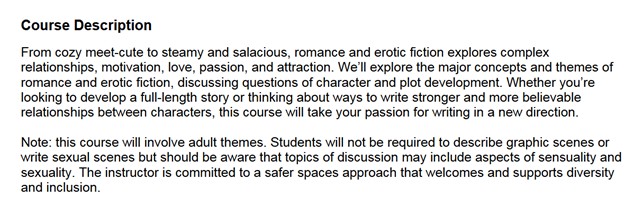
Predictability offers a measure of stability for students. As a general UDL principle, offering students the ability to predict and expect course outcomes is a normative practice – we offer course outlines, we set deadlines and timelines, and we describe what we’ll be doing over our work together. For WRI 426, establishing expectations within the course description was a first step:
Fig. 1. Heather Clitheroe, WRI 426 Course description, 2025.
The course description was the first use of predictability – making it clear that we would engage in discussions of sexuality from the start, and including the term ‘erotica’ in the course title offered a frank statement of what would be coming. I also chose to include a statement that the classroom would be a welcoming and safe space, clearly signaling my intent and plans for the class.
Like all courses in the Creative Writing Certificate Program, WRI 426 is an online asynchronous course offered through D2L. This allows me to make all course content available, rather than revealing it week by week. As a course design principle, this also supported Venet’s predictability core priority. In this class, I was determined that there would be no surprises.
I applied Venet’s flexibility principle in my course design as a way to offer relief from deadlines, as students needed it, and a focus on competency-based and proficiency-based learning that focused on the demonstrated progress towards the courses learning outcomes.
I also recognized that the intensity of the subject matter might present challenges for students. There is always an emotional investment in writing fiction, but writing about relationships and sexuality can elicit a range of emotions and reactions. While the flexibility around deadlines offered flexibility, I intentionally added a one week pause to the course material to offer an opportunity for students to step away from their coursework without needing to feel that they were having to ask for exceptions or extensions. In coordination with my program director, I also asked that the course be scheduled during the summer – at a time when the emotional intensity of the course would not be compounded by concurrent enrolment in other writing courses, and when, frankly, it would be easier for students to be outdoors. The notion of going outside to ‘blow off steam’ might sound glib, but it was important to me to ensure that students could more easily access other modes of recreation and rest during the course, and to rejuvenate. Consciously scheduling the course in a way that encouraged breaks during the summer was, for me, part of a trauma-informed practice aligned with principles of self-care.
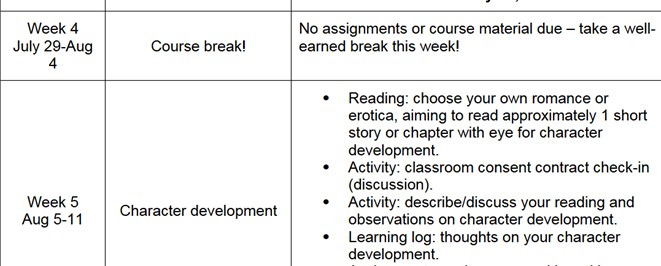
Fig. 2. Heather Clitheroe, WRI 426 Course schedule, 2025.
The perception of writers is that our work environment is marked by intense isolation and fierce concentration, and that it is a solitary act. Students coming to Continuing Education are in the emerging stages of their creative practice, when connection and community is a formative and fundamental experience. Venet’s core priority of connection describes various ways that educators can build a trusting relationship among peers and between student and instructor – including dedicated time and structures to support that connection building, rather than leaving students to do it on their own. Even though we work in an online asynchronous model, building time into the course for meetings was a way for me to establish and support an inclusive environment. This took the form of a course introduction meeting (not an uncommon occurrence in these types of courses!), but also included an optional discussion night, and the ability to book meetings with me on an individual basis. I also provide a ‘quickstart’ video that students can watch – it’s important to me that they have an opportunity to see my face and hear my voice if they wish.
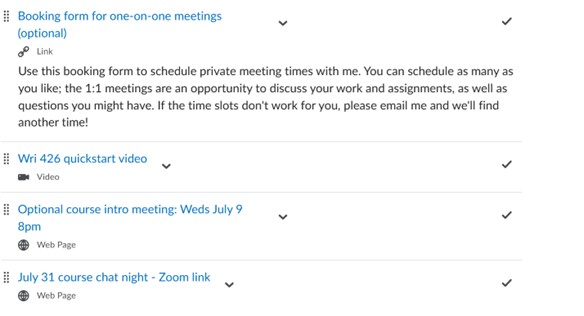
Fig. 3. Heather Clitheroe, WRI 426 Quickstart Video, 2025.
The course introduction also gave me an opportunity say, clearly, where my personal boundaries lay with explicit material. It also gave me an opportunity to reassure students that I encouraged and welcomed them and the stories they would be writing. The average age of a creative writing student in our courses is 41, and the majority of students identify as female. As such, I find that students sometimes express a concern that I, as instructor, might find their work upsetting or too graphic. The course introduction gave me an opportunity to clearly state that I was willing and excited to read their work, and that they could trust that I had a support network of my own – that they did not have to worry about their work. It was, for me, an unusual step, but given what we know about the prevalence of sexual abuse experiences in adults, and given the course topic, providing reassurance and clearly explaining boundaries helped to establish trust, a sense of safety, and, I hope, a feeling of unconditional positive regard for my students’ wellbeing, as well as my own. Honesty, for me, is an essential part of a trauma-informed teaching practice because of how it relates to connection, and it was especially essential for this classroom.
Of Venet’s core priorities, empowerment was the most important to developing an inclusive and safe environment for students in WRI 426. I use a number of course design principles to enhance student experience.
In my initial stages of course planning, I met with the acting manager at the Sexual and Gender-Based Violence Prevention and Support Office to talk about best practices for the class, and to talk through my ideas to engage concepts of consent. At her suggestion, I developed discussion time for the students to talk about ways to support consent-based interaction in our class space:
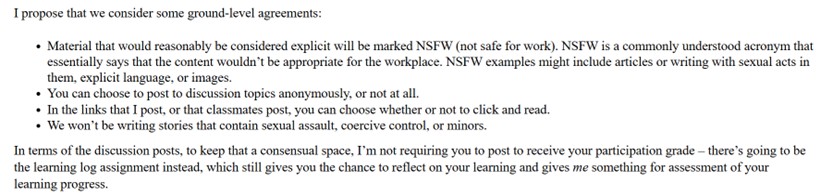
Fig. 4. WRI 426, Course design strategy, 2025.
A very simple tactic was to mark explicit consent so that students could decide what to access, and also when to access it – recognizing, for example, that they may not wish to read coursework while at work. While course content and links were presented that included explicit topics, none of them were mandatory – a student could complete the entire course without them. As an instructor, I thought long and hard about balancing the learning opportunities with ‘off-ramps’ to allow students to skip content that could be potentially upsetting or triggering. Ultimately, I developed content that allowed all students to engage and linked it to enriching resources that were accessible and inclusive. This offered students the choice to engage, but also to pass without fear of consequences. This was another opportunity to use trauma-informed practice; by offering choice, I was also offering students the ability to consent. And, given the context of sexual abuse prevalence, this meant that I was not just talking about consent in my course...I was practicing it.
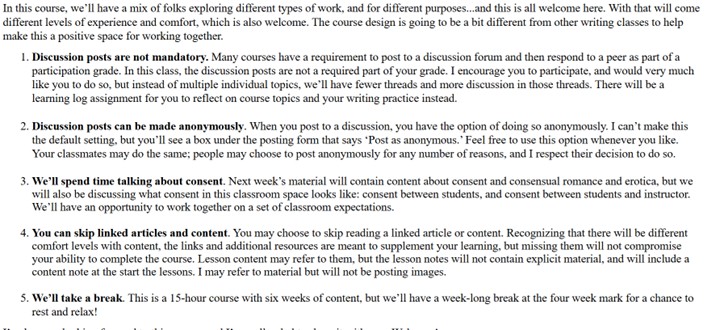
Fig. 5. Heather Clitheroe, WRI 426 Syllabus Excerpt, 2025.
It was also very important to offer an opportunity to post anonymously in discussions, and to disable the auto-preview function for discussion posts (a default setting in D2L).

I also disabled the auto-preview function for discussion posts (a default setting in D2L), to effectively slow down the movement through posts and give an opportunity for students to consent to click through.
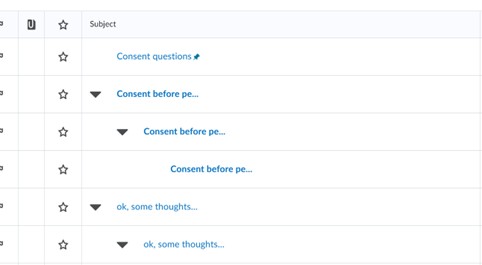
Fig. 6. Heather Clitheroe, WRI 426 Consent Settings on D2L, 2025
These small steps protected the discussion space (as a class, we agreed to flag ‘NSFW’ in posting titles to advise each other of explicit content) and also offered a stigma-free way of posting. Anonymity in a classroom that has agreed to consensual behaviour gives space for voices that might not be heard, and students could choose to post anonymously at any time by selecting the option before posting.
Making the discussions optional was a difficult choice – often, students enjoy the back and forth with classmates and weaving that into a mandatory participation mark is a way to keep it moving. But mandatory discussion posts can also fall into the trap of ‘post one, reply to one,’ where students make perfunctory remarks or echo what others have said without adding much to the course. In its place, I introduced learning logs – a weekly self-reflection assignment contained in a single document passed back and forth between me and the student. It provided me with an opportunity to directly respond to students, and for them to explore ideas and questions in a semi-private space.
This course grew out of a single interaction I had with a student who wanted to write erotic content but was afraid I would not be willing to read it, or that I wouldn’t allow it. It was a moment of vulnerability for the student, and the first time I’d been asked if erotica could be submitted for coursework. It was a keystone event that catalyzed me to develop a course space that not only made it possible to explore romance and erotica creative writing practices but actively encouraged it. There is an element of the writer in every text they create, and in a classroom setting, with these subjects, the level of vulnerability increases. Developing an inclusive classroom to explore relationships and sexuality in fiction was a way for me to lead by example, and to show students that they had a right to engage. It also gave me a chance to interrupt historical narratives about romance and erotica by weaving in course material on ethical representations of all kinds of relationships, the problems of tacit consent, and how we might explore and incorporate active consent into our stories. It was, for me, a way to “transform cultures and relations of power and privilege” and to ensure that my students could “experience a welcoming space of fairness, dignity, and human flourishing” (Office of Institutional Commitments—EDIA).
As an instructor, the course challenged me to consider my assessment practices – particularly the feedback I provided. With sensitive course content, the stakes can feel so much higher for students and practicing unconditional positivity for them was also an opportunity to recognize that they were capable and in charge of their learning. I learned new ways to harness D2L features to develop a more inclusive classroom space, and new resources and people to connect with to support my teaching. I was forced to practice self-care and to reflect on my own resilience; the emotional labour of grading romance and erotica required me to develop solid, descriptive rubrics that I could use to frame my assessments.
Offering space in teaching spaces for sensitive topics is worth the effort, but trauma-informed practices shouldn’t be reserved just for those topics. As teachers, we cope with a number of pressures – our labour can be assured or it can be precarious, the supports ranging from patchwork to seamless, and our students’ contexts always shifting and changing. It can be easier to work with “safer” topics, but I think we do our profession a disservice when we deny ourselves and our students the opportunity to look critically and compassionately at sensitive subjects like erotica (and there are certainly many others). From an administrative point of view, bringing forward comprehensive plans to our directors and coordinators are an essential part of creating the safe, inclusive space because it demonstrates the care we take in designing our curriculum. That extensive planning, though, also helps to make the system-based supports more visible. I received mentoring and offers of debriefing support from faculty members, from our staff at the Sexual and Gender Based Violence Prevention and Support Office, and from my program coordinator. It helped to open opportunities to talk about curriculum development resources but also reminded me that I was not teaching this course all by myself.
This course was also a way to offer healing – to myself, and to my students. What that looked like was different for each one of us, but the overwhelming message I heard from my students – and from my own self-reflection – was that it was a way of reclaiming space and making space, whether that was on a personal level, or as part of a larger goal to tell new stories about love and sexuality.
Why teach romance and erotica? To let my students be heard and seen.
And to make it interesting.
And to make it relevant.
And to make it healing.
And to make it safe.
Works Cited
Association of Alberta Sexual Assault Services. Summary of Key Findings: Prevalence of Sexual Assault and Childhood Sexual Abuse in Alberta. 2020. https://aasas.ca/wp-content/uploads/2022/05/Prevalence-of-Sexual-Assault-Childhood-Sexual-Abuse-Summary-of-Key-Findings_FINAL.pdf
Office of Institutional Commitments—EDIA. The Language of EDI—Glossary. University of Calgary. 2025. https://www.ucalgary.ca/equity-diversity-inclusion/literacy-education/edi-knowledge-hubs/edi-glossary Accessed 10 September 2025.
Venet, Alex Shevrin. Equity-Centered Trauma-Informed Education. Routledge. 2024.